

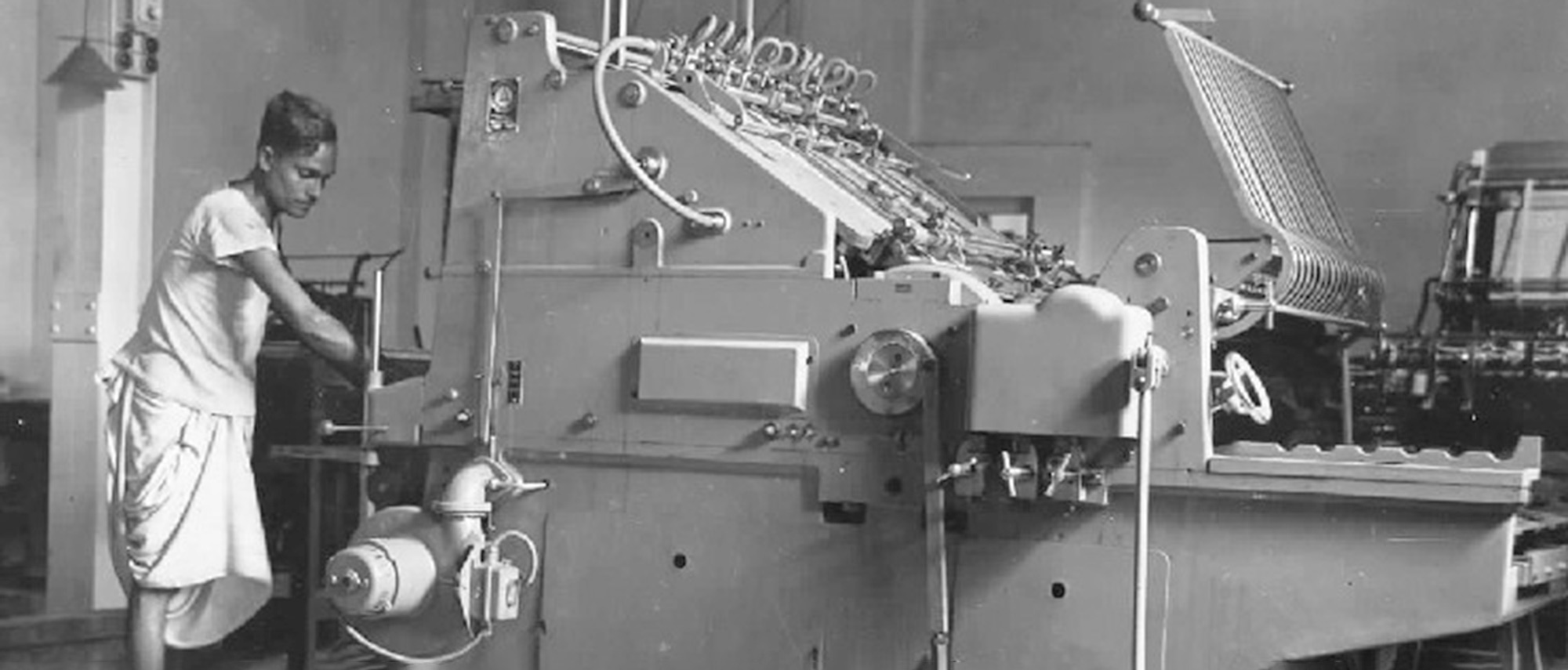
Imagine a time when books were copied by hand, and knowledge passed from person to person through spoken words. In such a world, the arrival of the printing press in Odisha was nothing short of a revolution. It sparked a cultural awakening that changed how Odias read, learned, and expressed themselves forever.
The First Printing Press: Odisha Steps Into the Modern Age
The story begins in 1837 in Cuttack, when Christian missionaries especially the Baptist Missionaries brought the first printing press to Odisha. Led by Rev. Amos Sutton, a dedicated missionary and linguist, they set up the ‘Mission Press’ with a dream to make education and spiritual learning available to everyone through the Odia language.
At that time, the idea of printed books was still new in India, and bringing this technology to Odisha opened a fresh chapter in the region’s history. The printed word could now reach villages, schools, and homes connecting people like never before.
The First Odia Book: A Language Finds Its Voice
The first fruit of this new technology came the same year. In 1837 the first Odia book a translation of the ‘New Testament’ rolled off the press at Cuttack. Translated by Rev. Amos Sutton, it wasn’t just a religious text, it was a linguistic landmark. For the first time, Odia readers could hold a printed book written in their own language. This moment proved that Odia was not only a spoken language but also a powerful medium for printed literature. This publication became the foundation stone of Odia printing culture, paving the way for grammar books, school texts, and eventually, the vibrant world of Odia journalism and literature.
Growth of the Odia Print Culture
Once the Mission Press started printing, there was no turning back. Books on grammar, education, and religion began to appear. In 1841, Amos Sutton published A Grammar of the Oriya Language, one of the earliest comprehensive guides to Odia grammar.
By the mid-19th century, printing presses were slowly spreading, and a new wave of writers and thinkers emerged. The printed page became a powerful tool for cultural unity and social reform.
In 1866, Gouri Shankar Ray started ‘Utkal Deepika’ the ‘first Odia newspaper’ which played a vital role in promoting Odia identity and public awareness. From that point on, the printing press became a voice of the people.
From the humble Mission Press in Cuttack to modern publishing houses and digital Odia media, the legacy of that first press still echoes through every printed page.
The story of Odisha’s first printing press is the story of a people discovering the power of their own voice. It’s about how one machine and one book changed the destiny of a language.
Thanks to pioneers like ‘Rev. Amos Sutton’ the printed word found a home in Odisha and from that moment, the Odia language never looked back.
The next time you flip through an Odia newspaper or novel, remember it all began in a small corner of Cuttack in 1837, where the first printing press whispered the promise of a new era.